


Views: 0 Author: Site Editor Publish Time: 2026-08-21 Origin: Site


Walk through any modern commercial building or upscale residence, and you'll notice something immediately: the hardware holding the glass together matters just as much as the glass itself. A flimsy fitting, a misaligned hinge, a handle that wobbles on the first pull—these details erode trust in a space before anyone has said a word. On the flip side, well-chosen, well-made glass hardware elevates an entire project, signaling quality in every touch point.
This post breaks down what separates good glass hardware from great, which components deserve your closest attention, and how to make sourcing decisions that hold up over years of daily use.
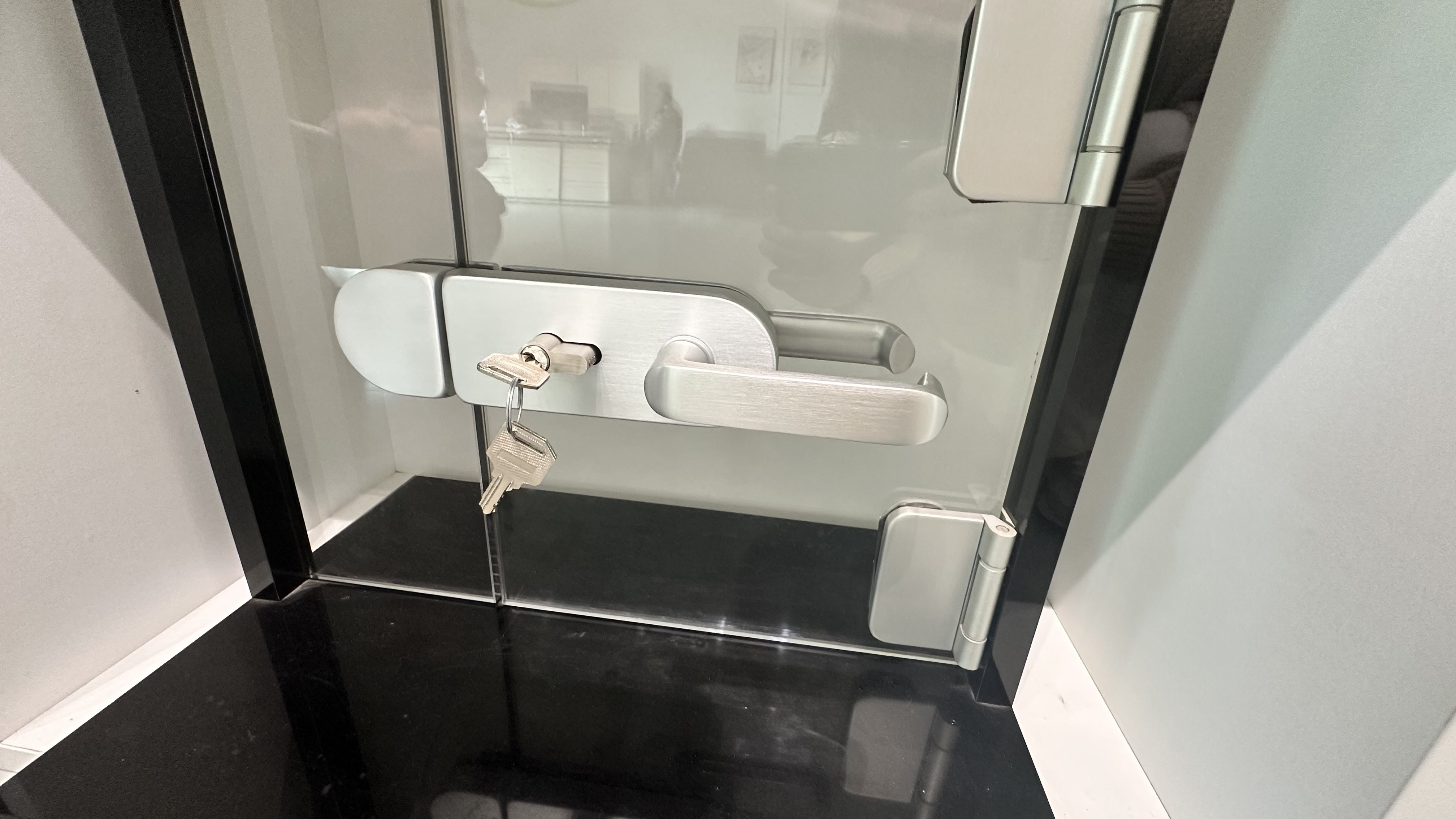
Glass itself is a passive material. It holds its shape, transmits light, and divides space—but it does nothing on its own. Every functional outcome depends on the hardware connecting it: the hinges bearing the swing weight, the handles transmitting user force, the clamps distributing structural load across the panel edge.
This dependency has a direct implication for buyers and specifiers. Choosing glass at the right thickness and specification is table stakes. Choosing the hardware system thoughtfully is where projects succeed or fail in practice. A door rated for 10,000 operating cycles is only as reliable as its weakest component, and that component is almost always a fitting that was value-engineered out of the budget at the last moment.
The most common mistake in commercial procurement is treating hardware as an afterthought—something to select from a catalog after the design decisions are locked. Bringing hardware selection forward in the process, alongside glazing specification, produces better outcomes and fewer costly site corrections.
Understanding what each component does makes it easier to evaluate options objectively. The table below summarizes the primary components found in a typical glass door or partition system, along with their function and key selection criteria.
Component | Function | Key Selection Criteria |
|---|---|---|
Patch fitting | Connects glass panel to frame or floor | Load rating, material grade, corrosion resistance |
Glass clamp | Secures glass to a support structure | Clamping force, rubber insert quality, finish |
Door handle | Provides grip for operating the door | Ergonomics, fixing method, surface treatment |
Shower hinge | Allows glass panel to pivot | Opening angle, load capacity, self-closing option |
Glass lock | Secures the door in closed position | Latch mechanism, keyed vs. privacy function |
Sliding door fitting | Enables lateral panel movement | Track load rating, roller material, damping |
Towel bar fitting | Mounts accessory bars to glass | Pull-out resistance, glass thickness compatibility |
Each of these components must be specified for the environment it will live in. A marine or high-humidity setting demands 316-grade stainless steel. A dry interior with low traffic can work well with 304-grade. Coastal projects, swimming pool enclosures, and shower enclosures are the environments where material shortcuts show up fastest as corrosion, staining, and mechanical failure.
The handle is the most-touched element of any door system, and it communicates quality more immediately than any other hardware component. Users form an impression in the first half-second of contact: weight, surface temperature, grip comfort, and resistance to flex all register before the door has moved an inch.
For glass doors specifically, the fixing method is critical. Back-to-back pull handles bolt through a pre-drilled hole in the glass, distributing load across a washer and spacer. A lever handle set paired with a patch-mounted lock body is common in commercial access applications where single-hand operation is required. In either case, the hole tolerances, the fastener material, and the quality of the rubber isolation bushing determine long-term performance.
Finish selection follows function. Brushed stainless is the most forgiving in terms of maintenance and fingerprint visibility. Polished chrome reads as premium but requires consistent cleaning in high-traffic environments. PVD-coated finishes in matte black or gold tones have become more prevalent in contemporary residential projects, offering improved scratch resistance over traditional plating.
Hinge failures are responsible for a disproportionate share of glass door warranty claims. The two dominant failure modes are fatigue cracking at the glass hole edge and mechanical wear in the hinge pivot mechanism itself. Both are largely preventable with correct specification.
Glass weight drives hinge quantity and rating. As a general rule, a single glass panel door up to 80 kg can be supported by two hinges rated appropriately for that load. Panels above 80 kg typically require three hinges, with the middle hinge positioned to reduce bending moment on the glass edge. Always calculate based on the actual installed weight, including any applied film or coating.
A butt hinge designed specifically for glass applications incorporates rubber-lined jaws that grip the glass edge without creating stress concentrations. Self-closing mechanisms—either spring-loaded or hydraulic—add complexity but are required in many fire-rated and accessibility-compliant installations. Verify that the self-closing force complies with local building code requirements, as doors that close too forcefully create accessibility issues and accelerate wear on the latch mechanism.
Sourcing hardware from a manufacturer without documented quality assurance processes is a gamble that rarely pays off. The consequences—callbacks, replacements, site labor, and damaged client relationships—far exceed whatever margin was preserved at the purchase stage.
At INF Hardware, quality assurance is built into the production process, not inspected at the end of it. The facility operates from a large-scale physical production base in Jiangmen, Guangdong, with a team of experienced engineers and production staff who specialize in bathroom and glass hardware systems. Accreditations from established quality assurance systems underpin every product category, from shower hinges and patch fittings to glass clamps, sliding door systems, and architectural ironmongery.
The product range is broad by design. INF Hardware serves contractors, distributors, and specifiers across multiple markets, which means the component selection spans entry-level commercial through to high-specification architectural projects. Buyers working on varied project types benefit from a single-supplier relationship rather than managing multiple vendor chains.
Hardware selection belongs in the early design phase, not the procurement stage. Bringing it forward gives the project team room to coordinate glass thickness, hole patterns, and structural fixings before fabrication—eliminating the costly conflicts that arise when hardware is selected after the glass has been cut.
The components that hold glass in place, allow it to open and close, and secure it at end of travel are doing quiet, continuous work every day. Getting that work right is a matter of specification discipline, supplier selection, and realistic load calculations—not luck.
INF Hardware is ready to support your next project with products built to perform and a team with the technical depth to back them up. Explore the full product range or reach out directly to discuss your project requirements.


